A trade-show date does not move. The lead-time number a supplier quoted last week might. Most quoted lead times name one figure and leave the buyer guessing where it starts,…
22 momme, if the mask is a single unlined layer of charmeuse. 19 is enough the moment a lining or a filled cup sits behind the silk. The general weight…
A brand owner sends the same artwork, the same size and the same cloth to two scarf factories. One quotes 50 pieces. The other quotes 500. Neither factory is being…
Real filament silk almost never forms true pills. Pilling starts when loose fibre ends work out of the yarn, migrate to the surface and tangle into balls under friction. A…
Two to five years is where the silk bedding trade lands on this question, and none of those figures is a measurement. The full published spread runs from one year…
The same file printed on 19 momme charmeuse and on 12 momme twill comes back as two different products. The charmeuse reads deeper on the face than the twill does.…
An OEKO-TEX Standard 100 badge on a silk pillowcase means every thread, button and accessory in it was tested for harmful substances. That is a real test with real limit…
The shape you sleep in is decided by where the garment is anchored, not by which one looks better on a hanger. A nightgown hangs from two shoulder seams and…
Modal is not the hotter fiber, and it is not the drier one either. On the standard textile measure it holds at least as much moisture as silk, the opposite…
A Hermès carré is hand screen-printed with up to 46 colours. A woven repeat cannot answer that with more screens, because every colour it shows is built from the yarns…
Spandex, elastane, and Lycra are the same fiber — it stretches up to 700% and appears in roughly 80% of US clothing. Learn what label percentages mean and why heat…
Tencel starts silky but can pill over time. Percale starts crisp but softens with every wash. Learn how they compare on temperature, durability, and care habits.
Crinkle fabric has an intentionally wrinkled texture made by weaving, chemical treatment, or yarn twist. Learn which crinkle types last and how to care for them properly.
Standard bed sheet sizes only tell half the story — pocket depth determines whether your fitted sheet stays on. Learn how to measure your mattress and pick the right fit.
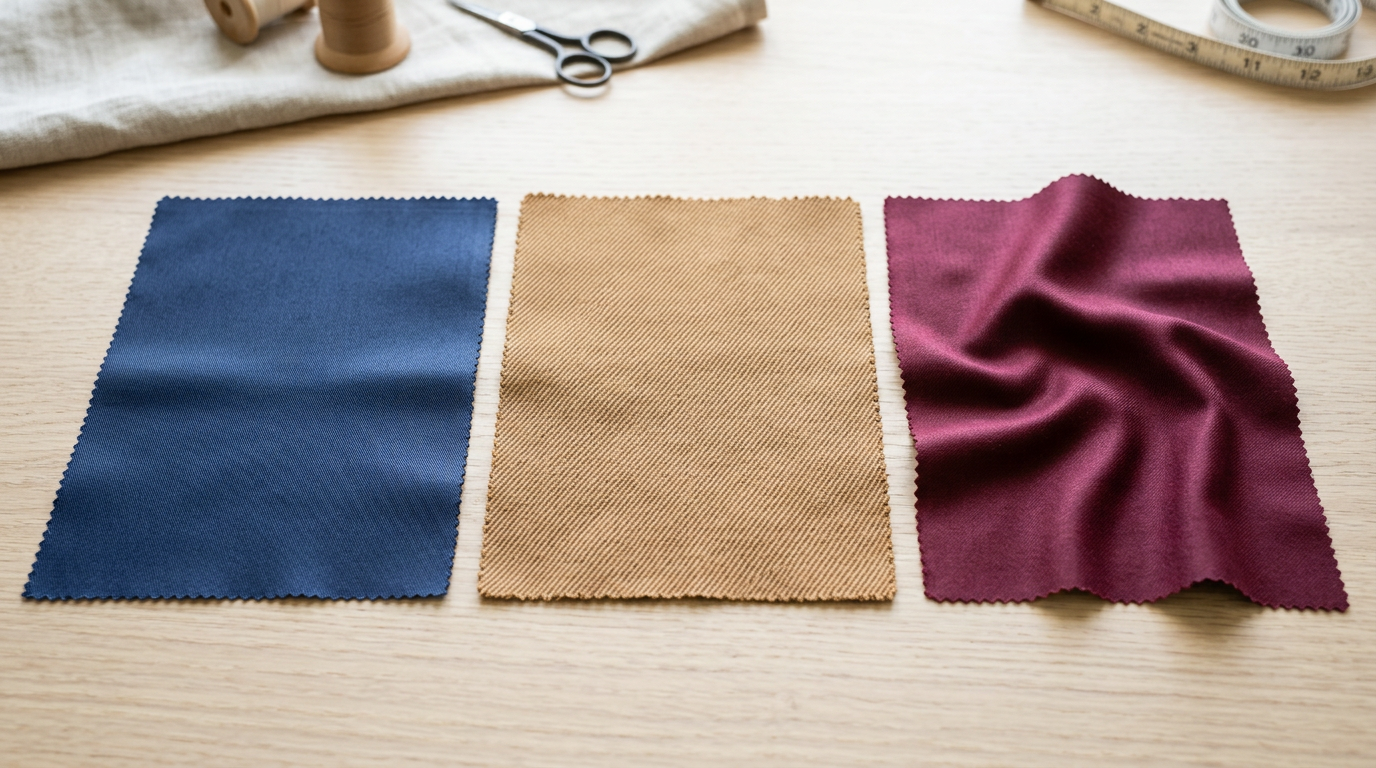
A fabric swatch is a small sample cut from the same bolt you'd buy. Learn what sizes to request, what to evaluate when it arrives, and why screens can't replace…
Modal absorbs 50% more moisture than cotton, but that only matters for certain products. Learn where modal earns its premium and where cotton is the smarter choice.
A linen blend mixes flax with cotton, polyester, or rayon to reduce wrinkles and cost while keeping breathability. Learn which blend type works best for your needs.
Charmeuse is a type of satin weave, not a separate fabric. The real choice is silk vs polyester and which momme weight fits your product. Here's how to decide.
Bandana printing method depends on fabric first. Screen printing suits cotton at volume, reactive digital handles silk and complex designs, and sublimation works only on polyester.
Momme measures silk weight — one momme equals about 4.34 GSM. Learn which momme range works best for pillowcases, pajamas, and scarves, and why higher isn't always better.
Bamboo silk is bamboo viscose, not silk. The FTC has fined major retailers for mislabeling it. Learn what's actually in the fabric, how it compares to real silk, and how…
Ice silk is a marketing name, not a fiber type. Most products use nylon or viscose blends that conduct heat four times faster than cotton. Learn what's actually inside.
Lurex is a metallic yarn made from aluminum sandwiched between plastic films. Learn where it shows up in everyday clothing, how it feels at different percentages, and how to care…
Silk can shrink 4–10% on the first wash depending on the weave. Learn why water breaks down silk's protein bonds, how to wash safely, and how to recover shrunken silk.
A handkerchief is a reusable fabric square for everyday personal use. Learn how cotton, linen, and silk compare — and why a handkerchief is not a pocket square.
Acrylic is a synthetic fiber designed to replicate wool's warmth at a lower cost. Learn what it does well, why it pills, and how to care for it properly.
Shantung is a textured silk with small slubs running in one direction, lighter and more fluid than dupioni. Learn how to tell them apart and spot polyester imitations.
Head wraps serve fashion, hair protection, or cultural expression — and each purpose needs a different style. Learn how turbans, bonnets, durags, and geles compare.
China produces roughly 80% of the world's silk, with India a distant second. Learn why production is so concentrated and what that means for pricing and supply.
Polyester satin is polyester fiber woven in a satin pattern — smooth and glossy, but it absorbs less than 1% moisture. Learn when it works and when silk satin is…
A kaftan is a long, flowing garment with wide sleeves that dates back to ancient Persia. Learn how fabric choice sets the dress code and how to style one for…
Fabric weight measures density, not quality. Learn what GSM and momme numbers mean, which ranges fit each product type, and how to use weight specs when shopping.
Silk regulates temperature, reduces friction, and absorbs 30% of its weight in moisture — but it weakens when wet and costs more each year. Here's where it's worth it.
No silk alternative replicates sheen, softness, and breathability together. Compare polyester satin, modal, lyocell, rayon, and cupro by product type to find the right match.
Polyester twill uses a diagonal weave that resists tearing and holds its shape. Learn how it compares to cotton and silk twill, and how to care for it properly.
The best fabric for your skin depends on your condition, not a generic ranking. Learn which fabrics clinical studies support for eczema, acne, and contact dermatitis.
Silk underwear reduces friction and regulates temperature, but it needs hand-washing and holds odors. Here's what clinical studies actually show — and what marketing leaves out.
If you’ve ever unboxed a silk dress or fabric and thought “wait, why is this bumpy?” — you’re not alone. Dupion silk catches people off guard because it looks nothing…
A hijab is a headscarf covering the hair, neck, and chest. Learn how it differs from the niqab and burqa, why women wear it, and which fabrics work best.
Silk fibre is a natural protein strand with a triangular shape that creates its shimmer, regulates temperature both ways, and rivals steel in strength.
Raw silk keeps its natural sericin coating, making it crisp, durable, and more affordable than processed silk. Learn how it feels, wears, and softens over time.
Satin is a weave, not a fabric. Learn how silk, polyester satin, and cotton affect your hair differently — and which works best for pillowcases, bonnets, and scrunchies.
Acetate fabric looks like silk at a fraction of the cost. Learn where it's used, how it compares to silk and polyester, and how to care for it properly.
Polyester vs silk compared by product category, not hype. Learn where silk earns its premium (sleep, formal wear) and where polyester is the smarter choice (travel, everyday accessories).
Learn what a sarong is, where it originated, what fabrics and patterns define it, and how to wear and style one for the beach, resort or evening events.