
Silk measures smoothest against hair, satin sits close behind it, and velvet is the worst of the common options.
That ranking comes from TRI Princeton, a textile research institute that pulls a hair tress between two fabric surfaces at 40% relative humidity and measures the friction. The gap between silk and satin came out small, which is awkward when a satin pillowcase costs a tenth of a silk one.
So the silk premium is not paid for smoothness. It buys moisture behavior, which only earns its price on items held against hair for hours. I switched to silk pillowcases two years ago, and I still would not pay the premium on a scrunchie.
Satin names the way threads interlace. Silk names what the threads are made of. A satin fabric can be woven from silk, polyester, nylon or rayon, so a satin label describes the surface, not the material.

Each word governs a different property. Weave decides how the surface behaves against hair, and fiber decides how the fabric handles water.
A satin weave gets its slip from long floats, threads that skip over several others before tucking back under. Those exposed floats abrade faster, so the slip you are buying and the fraying you will see are one property.
So the useful question at the listing is not silk or satin. It is what the satin is made of: silk fiber, polyester, nylon or rayon, and only the fiber content line will tell you.
Polyester satin slides against hair nearly as well as silk, and the bare fiber holds almost no water, which is where the two part company. Textile tables call that second property standard moisture regain, the water a fiber holds at room humidity as a share of its dry weight.
| Fabric | Friction against hair | Standard moisture regain |
|---|---|---|
| Silk | smoothest tested | 11.0% |
| Satin weave | close behind silk | set by its fiber |
| Cotton | rougher than satin | 8.5% |
| Velvet | worst tested | set by its fiber |
| Polyester | inferred from satin | 0.4% |
| Rayon | inferred from satin | roughly 11-13% |
TRI Princeton measured velvet at 37.4% more friction than cotton and 76.5% more than satin, which is a lot of drag for a fabric bought because it feels soft.
That 0.4% is also why polyester goes static, a link Northeastern University physicist Ivana Dimitrova traces to high insulation combined with near-zero moisture uptake. Charge builds instead of bleeding away, and humid air carries it off again, which makes flyaway hair a dry-winter problem, not a permanent one.
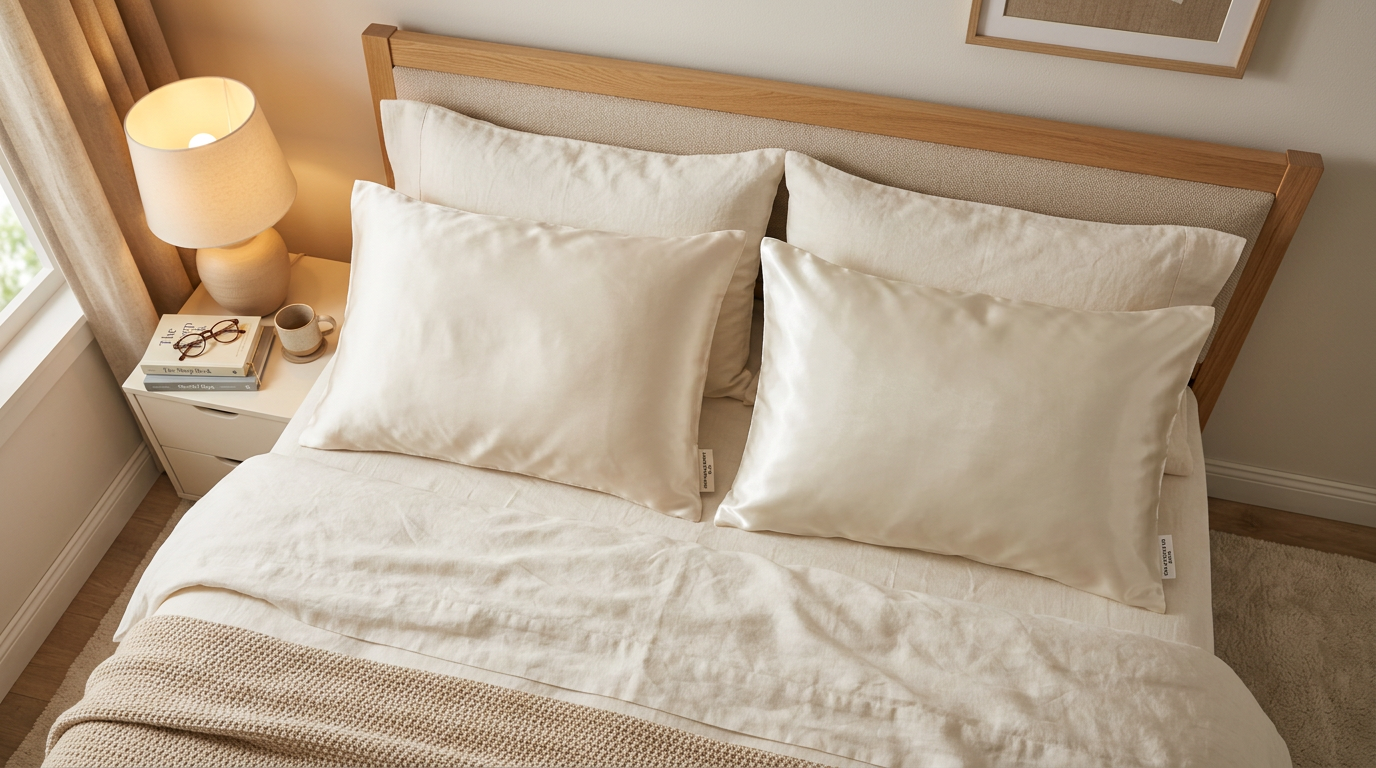
Polyester wins one property outright. Its abrasion resistance beats every common fiber except nylon, which is the strongest case for polyester over silk on anything washed hard and often.
Rayon is regenerated cellulose from wood pulp, which is why a rayon satin feels so convincing in the hand. It is also the least durable fabric in this comparison, and weakest when wet.
None of this touches hair loss. Friction acts along the shaft, so smoother fabric means less breakage, while shedding is a follicle event that the American Academy of Dermatology puts at a normal 50 to 100 hairs a day.
The exception is tension rather than fabric, and the AAD lists pulling hairstyles as a cause of loss.
Curly hair is decided by friction, fine hair by static and denting, thick hair by how fast the fabric moves water, and color-treated hair by both. Match the property to the problem and the fabric follows.
Curly and coily hair is also where a bonnet or a scarf earns its place on top of whatever the pillowcase is made of.
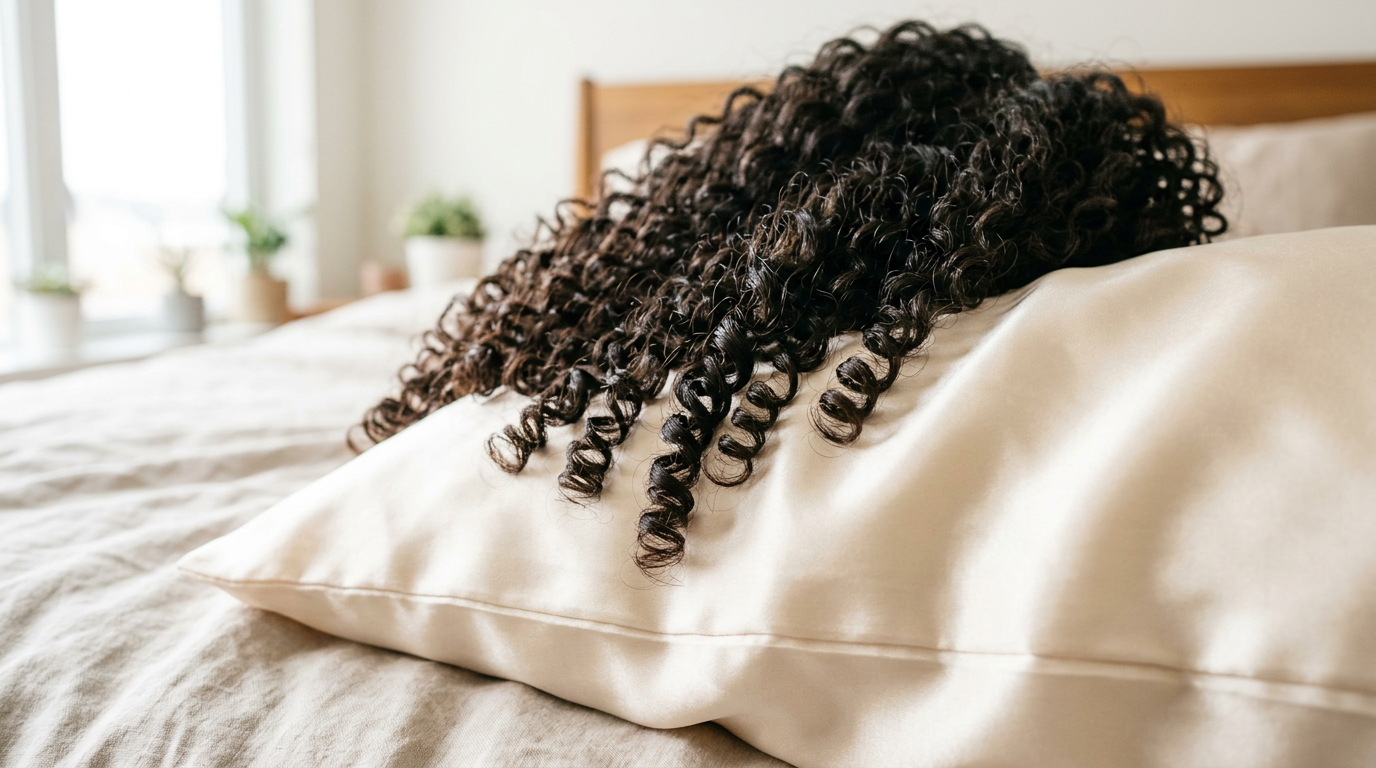
The pillowcase is the only one of the four where silk repays the money. Contact time decides it. A pillowcase sits against hair for six to eight hours, a scrunchie for an hour, and a hair towel wants the opposite property altogether.
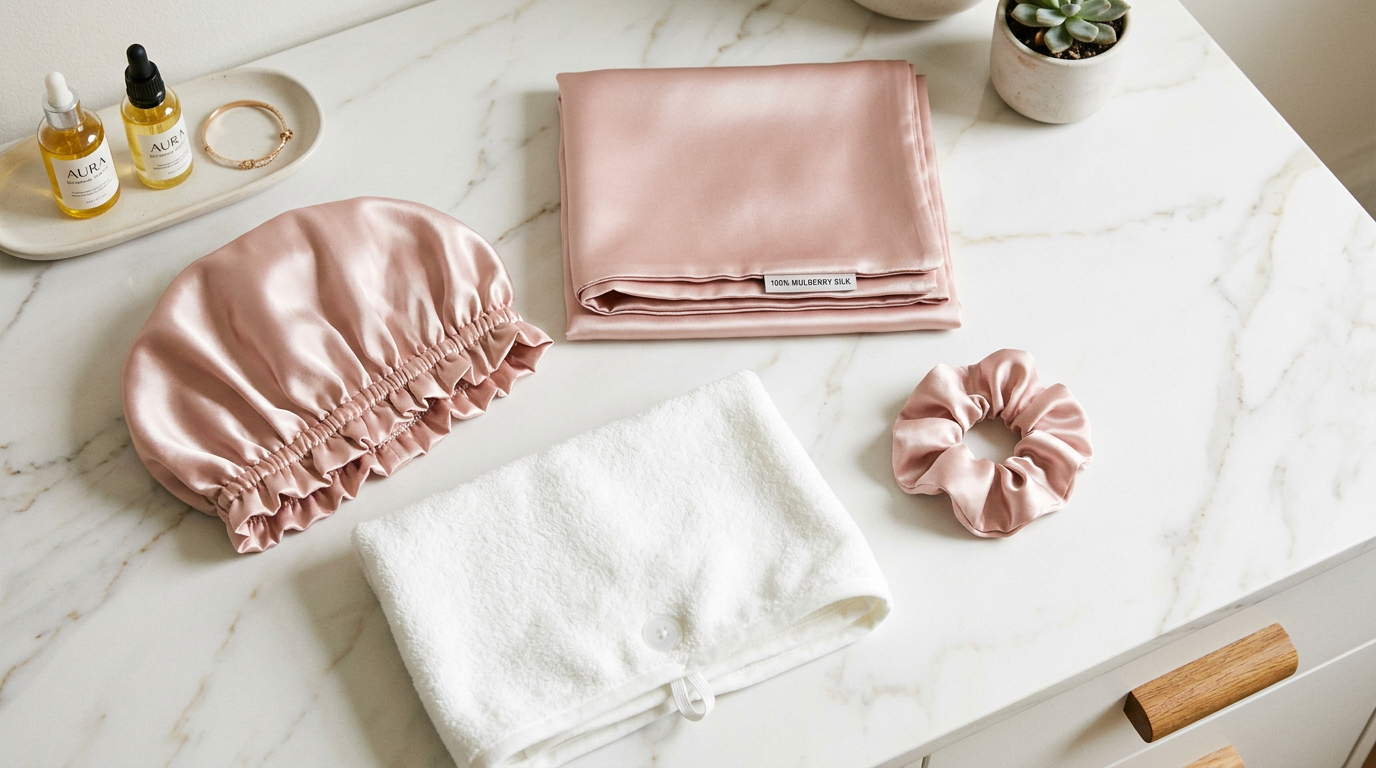
Microfiber is mostly polyester, which reads as a contradiction until you notice where the water goes: held between millions of fine filaments rather than taken up by the fiber itself.
Under $20 buys a satin pillowcase that beats cotton and lasts about a year before the floats start to fray. Between $25 and $50 is where silk stops being a gamble. Above $50 the extra money goes to packaging, branding or a zipper.
I have tested pillowcases from $26 to $89 and found no difference in quality that tracked the price. None of that money buys smoothness. It buys moisture behavior, which is why the pillowcase deserves the premium and the scrunchie does not.
The one habit worth changing costs nothing. Check the fiber content line, not the word on the front of the package.