
Silk futures contracts on the Chinese exchanges experienced broad declines across all delivery dates in Tuesday's trading session, with the 250925 contract notably continuing to see increased trading positions despite the downward price movement. Under the current complex macroeconomic and microeconomic conditions, Chinese industry participants are adjusting their trading strategies based on their companies' production capabilities, sales forecasts, and overall market outlook.
Spring cocoon harvesting continues in Guangdong province. Purchase prices in areas like Xumen have been adjusted downward, currently hovering around 58 yuan per kilogram, with variations based on cocoon quality and characteristics.
In a significant development that has sent shockwaves through global markets, the White House announced today that the United States has officially implemented a staggering 104% tariff on Chinese goods. The measure, which combines a new 50% tariff with previously existing duties, took effect at 12:00 pm Eastern Time on April 9th.
The Trump administration justified this dramatic increase by citing China's failure to remove its retaliatory 34% tariffs on American products. This marks the fourth round of tariff increases in just three months under President Trump's second term, with rates climbing from 10% at the beginning of the year to 34% in early April, and now to an unprecedented 104%.
During a routine press conference on the afternoon of April 9th, Chinese Foreign Ministry spokesperson Lin Jian responded firmly to questions about the new American tariffs: "The Chinese people's legitimate right to development cannot be deprived, and China's sovereignty, security, and development interests cannot be violated. We will continue to take resolute and powerful measures to protect our legitimate rights and interests."
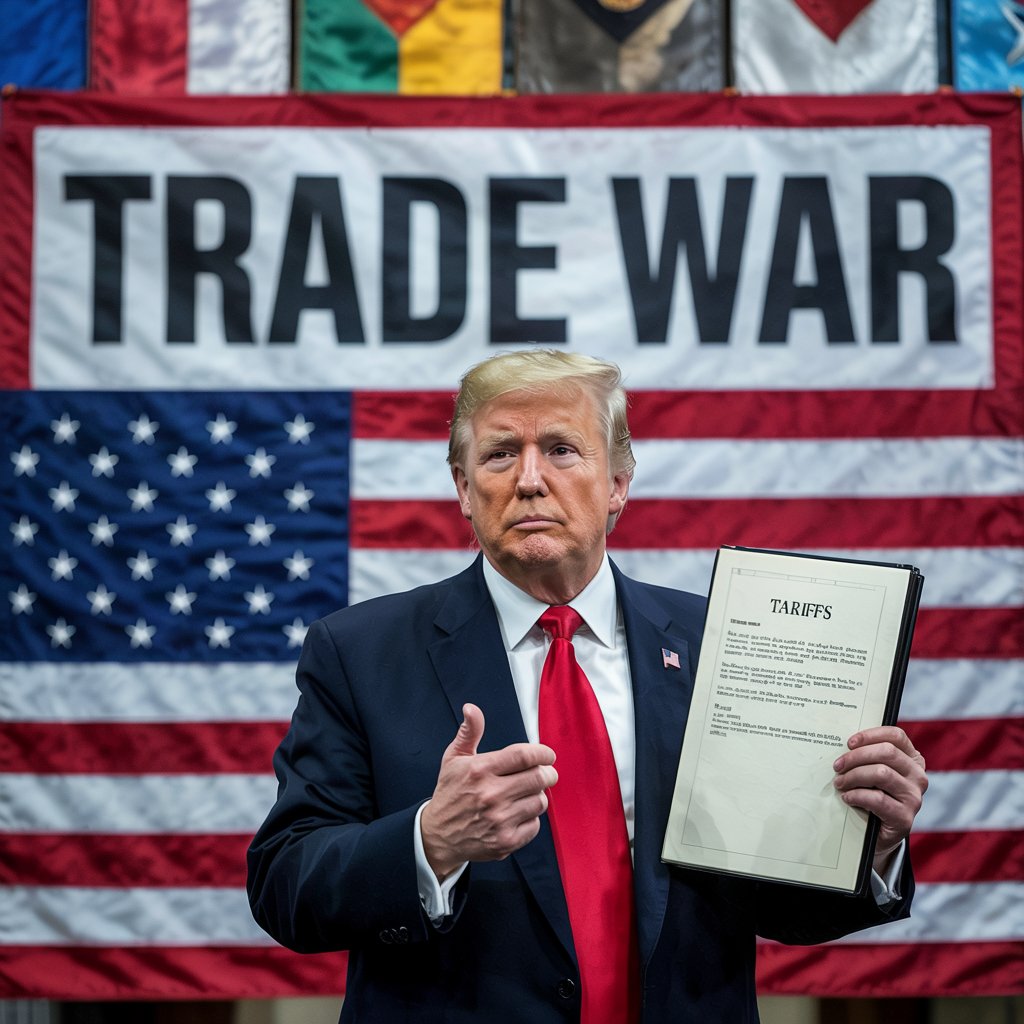
Economic analysts project devastating consequences from this latest escalation in the trade war. According to recent calculations, the 104% tariff could potentially reduce China's GDP growth by approximately 1.1 to 1.5 percentage points.
The impact will be particularly severe for labor-intensive manufacturing sectors. Industries such as textiles and apparel, which typically operate on profit margins below 5%, are especially vulnerable. Experts predict that these extreme tariffs could directly result in the disappearance of 30-40% of Chinese export orders to the United States.
The scale and pace of these tariff increases far exceed those implemented during the global trade war triggered by the Smoot-Hawley Tariff Act of 1930, which historians widely acknowledge as contributing to the deepening of the Great Depression.
Recent trade statistics underscore the already significant impact on the silk industry. According to the U.S. Department of Commerce, during January and February 2025, the total value of U.S. silk goods trade reached $1.046 billion, representing a slight year-on-year decrease of 0.08%.
Breaking down these figures reveals more troubling trends: U.S. silk exports amounted to $93.5128 million, plummeting by 27.62% compared to the same period last year. Meanwhile, imports totaled $923 million, an increase of 4.60% year-on-year.
Industry analysts suggest that Trump's aggressive tariff policy represents a fundamental shift in U.S.-China trade relations. The silk market, long considered a barometer for luxury textile trade between the two nations, may face prolonged disruption as manufacturers and exporters scramble to adapt to the new economic reality.
Chinese silk producers, such as UR Silk, are reportedly exploring alternative markets in Europe, Southeast Asia, and the Middle East to offset potential losses in the American market. However, establishing new trade channels takes time, and the immediate impact on Chinese silk farming communities could be severe.
Trading floors in major Chinese silk exchanges have reportedly seen increased volatility as traders attempt to price in the potential long-term effects of these punitive tariffs. Some industry experts suggest that smaller producers may need to consolidate or pivot to domestic markets to survive.
The broader Chinese textile industry, which includes the silk sector, now faces critical strategic decisions. Some manufacturers are considering relocating production facilities to countries not subject to these extreme tariffs, while others are investing in automation and higher-value products to maintain competitiveness despite the trade barriers.
American consumers of silk products—ranging from high-end accessories to furnishings—can expect significant price increases as importers pass on the tariff costs. Industry analysts predict that retail prices for silk goods in the US could rise by 40-60% in the coming months, potentially shifting consumer preferences toward alternative fabrics.
In China, the redirection of silk products to domestic markets might initially cause price deflation, but the disruption to the industry's economic model could lead to longer-term structural changes in production volume and quality standards.
As the situation continues to develop, silk industry stakeholders on both sides of the Pacific are bracing for a period of significant adjustment and uncertainty. Many market observers question how long these extreme tariff levels can be sustained without triggering even more dramatic economic consequences for both nations.
The Trump administration has signaled that these measures are part of a broader strategy to address trade imbalances and intellectual property concerns, suggesting that relief may depend on concessions from Beijing. Chinese officials, meanwhile, have indicated their readiness to implement countermeasures to protect domestic industries.
For the ancient and culturally significant silk industry, this modern trade conflict represents perhaps its greatest challenge in recent history, testing the resilience and adaptability of producers, traders, and craftspeople whose livelihoods depend on the smooth flow of these luxury goods across international borders.